Halftime show or a cultural and political protest?

The closing of the performance could not have been more symbolic.Lamar ended his performance with a song titled “Turn the TV Off,” which was interpreted as a direct message to the audience:
“Turn off the TV, question the reality that is being shown to you, wake up from the game.”
Every element in Lamar’s performance was carefully designed to convey a message.
Not only was it a visually striking spectacle, but each scene represented a critique of politics, history, and current society.One of the most striking moments was the appearance of Samuel L. Jackson, playing a modern version of Uncle Sam, the character who has historically represented the United States government.But this was not the classic image of Uncle Sam with his finger pointed to recruit soldiers.In the context of the show, Jackson embodied an oppressive, manipulative, and condescending figure, who tried to tell Kendrick how he should behave on stage and what messages he could convey.This detail symbolizes the censorship and control that the entertainment industry and politics have exercised over African-American artists throughout history.

It's a nod to how the system has tried to shape their voices to make them more "acceptable" to the mass audience, stifling their authenticity and social denunciations.One of the details that caught the attention of the most attentive viewers was the use of the phrase "A Minor" and the chain that Lamar wore with a lowercase "a" hanging from it.In music, A Minor is a tonality, but in this context it is believed to be a direct reference to Drake, whose real name is Aubrey Graham.
The lowercase "A" could represent a diminished or less powerful version of Drake, reinforcing the idea that Lamar considers him a lesser opponent in the hip-hop industry.
This small visual detail became one of the most discussed points on social media, with fans and analysts interpreting it as a subtle but forceful blow to the rivalry between the two rappers.Another of the most talked about moments was the surprise appearance of Serena Williams, one of the most important athletes in history.However, what really caught the attention was that, when she appeared on stage, she performed the “Crip Walk,” a dance with roots in the gang culture of Los Angeles.
But the message went further. Serena Williams was Drake’s partner, and her presence at Kendrick Lamar’s show, where she performed “Not Like Us,” a song with innuendos against the Canadian rapper, was seen by many as another innuendo in the rivalry between Lamar and Drake.
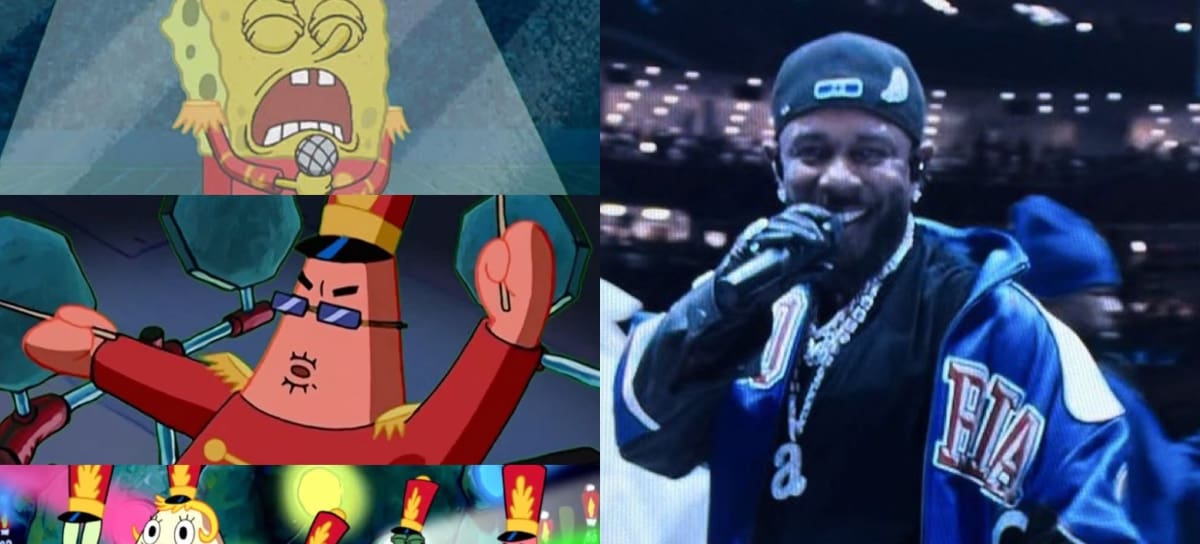
Kendrick Lamar's Halftime Show was not just a musical spectacle.
It was a political statement, a cinematic work, and a turning point in Super Bowl history.With meticulous visual and narrative display, Lamar managed to turn the world's largest stage into a platform for resistance, memory, and social criticism.As the days pass, the impact of his performance continues to grow.The debates on social media do not cease, the analysis continues, and his legacy is strengthened with each reproduction of the show.
Was this halftime show really an entertainment show or a protest?
REFERENCE:
https://tribunadelabahia.com.mx/kendrick-lamar-halftime-show/
Leonor Guadalupe Torres Alarcón


Comments
Post a Comment